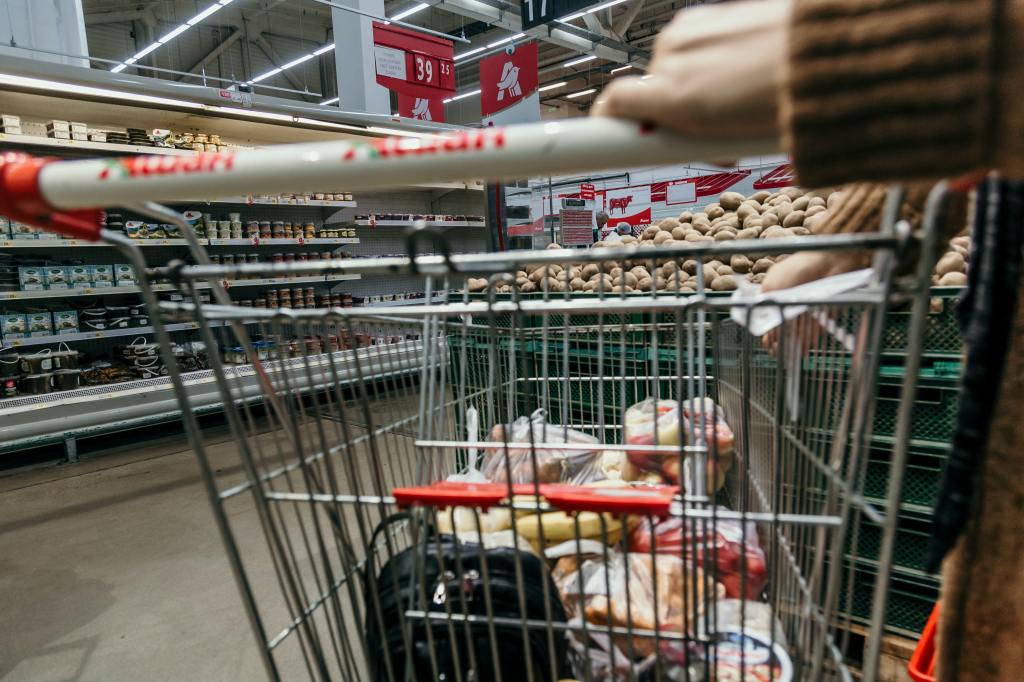
Recently, I was in a grocery store with an unfamiliar layout to me. I was looking for pickle relish. “Hmmmm, okay so it is likely to be with the condiments, olives, and salad dressings …”, I thought. Sure enough, I found it without asking for assistance when I caught sight of a long row of ketchups in one aisle.
Let’s take our cues from a grocery store’s efficiencies. Here are a handful of those that come to my mind:
Takeaway 1: Stores want you to find things without asking their staff.
Stores are smart that way. They want you to find things. By yourself. Because almost none of us is willing to hunt down an employee and ask. Stores are arranged so that shoppers can find things and the store scores a sale. They use what I call “intuitive storage”, storage so straightforward and simple that it needs no explanation.
Before konmari, when my family would ask me where something was, it meant me getting up and helping them look because I myself had no idea where the item might be. Or wait, I take that back. I had about 15 ideas where the item might be … and helping them look was easier than describing those 15 places.
Shall we even talk about how much I would harrumph and complain to have to help them find something? No. No, let’s not go there.
When we use intuitive storage like a retail store, we get to be smart that way. Our housemates get to find their things. We arrange our homes so that they can find things and we score some relaxation time.
Takeaway 2: Stores group similar items together.
This experience with the pickle relish reminded me of the wisdom of storing like items together that Marie Kondo recommends somewhere in her “Life-Changing Magic of Tidying Up”.
Before konmari, my storage was scattered. None of it was intuitive. None of it was “self-serve” like the stores’ arrangements are. My household set-up relied on my memory of where I last put it and frankly, I have better things to occupy my brain. Don’t we all?!?
Post-konmari, I am now training my family to find things in their new homes. Not extensive training, mind you. Just a bit of training. The week I started writing this blog post, my youngest asked for more notebook paper for school. Instead of helping her look for it, I had her think through what category notebook paper was in (office supplies) and then think through where ALL our office supplies were kept (in a repurposed five-drawer filing cabinet in the garage). She found the paper on her own and thereafter found other office supplies when she had another need for them. The same goes for cleaning supplies (lower shelves of the hall closet) and toiletries (upper shelves of the hall closet). My family can think of the category of the item, then its general storage location and usually have success finding it on their own. And I get to occupy my brain with something else.
Takeaway 3: The best stores keep a tight inventory.
Part of a retail store’s success is keeping a tight inventory based on what will practically fly off the shelves. They stock for today’s customers with today’s needs.
What if you took this mindset into your present inventory? Saving those baby toys for five years until the next child comes along would make little sense. Not devoting 10 minutes every season to cull out expired medicine and unused personal care items would be unwise. And that junk room? Oi vey, don’t get me started!
When we look at people who are successful at what they do, they often keep a tight and knowledgeable inventory of their possessions. Or, shall I say, they keep a tight inventory of the possessions needed for their success. A professional NFL player is likely to have an extremely effective home gym, even if the rest of the home needs to be maintained by a household staff.
In the same way, I have seen you-tuber with a ba-jillion subscribers detail their visual and audio equipment inventory and it is like a well-choreographed dance to see them present what is on the shelves they devote to professional equipment. I believe that the wisdom they show in their inventory is part of their success, a small part maybe but definitely a contributor.
Takeaway 4: Grocery stores use “choice architecture” in their displays.
When a grocery store wants you to purchase one item over another, they make the favored item a convenient reach. They place it on a end-cap. They position it in the middle shelves.
Blogger and skilled researcher James Clear of jamesclear.com calls this arrangement “choice architecture”. Why not employ the same choice architecture in your kitchen? I place all our non-refrigerated fruit and vegetables on our kitchen island. Right on the counter. The day or two after a grocery trip, the produce so fills the counter that it looks like it will start rolling off. It gets eaten.
I have done experiments in which I placed all that produce in big bowls on the island counter. The more I contained it, the less my family ate it. I often discarded half-bowls full of rotting fruit. I took away the bowls and the produce once again was consumed.
By contrast, I place our potato chips and junk-y snacks in the far reaches of the lowest corners of the pantry. It is out of sight and hard to reach. Really, you have to be a contortionist or crawl on hands and knees to get them. We sometimes even forget it is there until we have guests and realize “Oh yeah, we have something common to serve up here!” The produce on the counter is consumed faster than the chips because it is more conveniently placed.
I use the same technique in our fridge. I rotate the food in there every other day or every third day. I bring produce and the plain yogurt to the edge of the middle shelves. The milk with the soonest expiration date is at the front. The cheese that should be eaten soon practically leaps at you from the center of the middle shelf. And so on. This frequent rotation takes me about 30 seconds to do. And as home manager tasks go, I like doing it.
Takeaway 5: Caaaaaarrrrrrts! Grocery stores make life easier with their carts.
Bonus! I just thought of a fifth takeaway. Carts! Grocery stores make roundups of items easier with the carts they offer. When tidying up, make one lap around your community rooms with a basket or container in order to return any items to their proper places.
So … group similar items together, keep a tight inventory for today’s needs and use choice architecture. And get yourself a cart. Which one are you going to try first?

 Maria Leahey, Tidiness Coach